Standardised meter models: why DLMS GCP matters for the metering business
Executive summary
DLMS/COSEM gave the metering industry a common language. But a common language is not the same as a common vocabulary. Two meters can both be fully DLMS/COSEM compliant and still expose different objects, different profiles and different event codes for the same thing.
The DLMS User Association's Generic Companion Profile (GCP) addresses this by defining a standardised set of objects, functions and behaviours that meters should implement in the same way. This paper explains what standardised meter models are, why they matter for running the metering business, and how to adopt them.
1. The problem: compliant, but not consistent
DLMS/COSEM (IEC 62056) defines how meter data is modelled and exchanged, using interface classes and OBIS codes. It deliberately leaves room for choice. In practice that means:
- Different object lists: vendors choose which objects, profiles and attributes to implement
- Different event codes: the same tamper or power failure can be reported in different ways
- Different configurations: load profiles, capture periods and registers vary between models
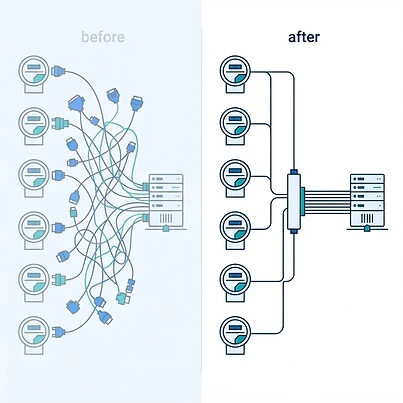
- Custom integration per model: each new meter type needs its own mapping in the head-end, MDMS and operations tools
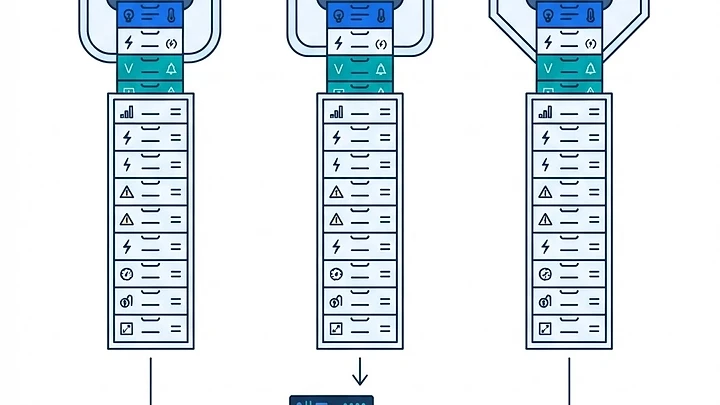
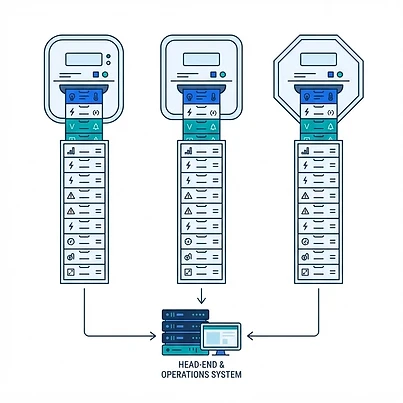
- Vendor-specific model
- Standardised model (GCP)
2. What a standardised meter model provides
A companion profile such as GCP builds on DLMS/COSEM and specifies:
- A defined object model: which objects, attributes and OBIS codes a meter exposes
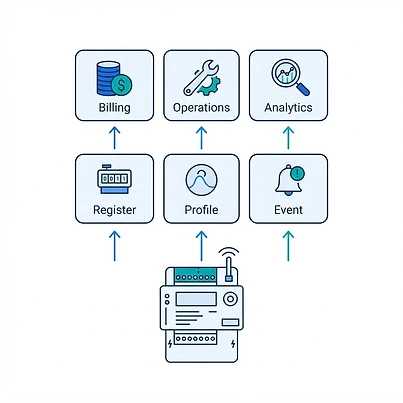
- Common use cases: billing reads, load profiles, events, disconnect control, firmware update and clock management, all behaving the same way
- Consistent security: agreed security suites and key handling
- Conformance testing: so a utility can verify a meter before it reaches the field

3. Why it matters for the metering business
Lower integration cost
Integrate once against the standard model rather than once per meter model. New vendors and new models become a configuration step, not a project.

Real vendor choice
When meters behave the same way, switching suppliers or running several in parallel is far less risky. Procurement can compete on price and quality rather than integration lock-in.
Better operations
Operations teams see the same events, the same profiles and the same KPIs for every meter. Triage rules, dashboards and reports work across the whole estate.
Cleaner data for billing and analytics
Consistent registers and profiles mean fewer reconciliation errors, fewer estimated bills and analytics that can be trusted across vendors.
- Vendor-specific (£k)
- Standardised (£k)
4. How to adopt standardised meter models
- Specify it in tenders: require conformance to the companion profile and evidence of testing
- Test before rollout: run conformance and interoperability checks on samples of every model
- Map legacy meters: use a vendor-neutral information model in your operations layer so older meters appear in the same shape
- Align upstream: map the standard model to IEC CIM for MDMS, billing and network systems
- Measure: track integration time, exception rates and read quality per model
5. Common pitfalls
- Assuming compliance means consistency: ask for the profile, not just the protocol
- Ignoring the installed base: most estates will run legacy and standard meters together for years
- Stopping at the meter: the value comes when operations, billing and analytics all use the same model
Conclusion
Standardised meter models turn DLMS/COSEM from a shared protocol into a shared way of working. For utilities, that means lower integration cost, real vendor choice and operations that work the same across the whole estate. Read how DLMS/COSEM and IEC CIM fit together, explore our information model, or request a demo.
Figures marked illustrative are indicative examples and not results from a specific customer.
How smoc.cloud helps
Two meters can both be DLMS/COSEM compliant and still behave differently. smoc.cloud maps every device to a standardised model based on the Generic Companion Profile, so differences that cause failures become visible and manageable.
- Spot it
Find non-conforming models
smoc.cloud profiles each meter type in the estate against the GCP baseline and highlights models, firmware versions and OBIS objects that deviate from it.
- Find the root cause
Link deviations to failures
Read failures, rejected commands and data gaps are grouped by model and firmware, so you can see when a problem is caused by a non-standard profile rather than by the network or the site.
- Fix it
Normalise and plan out the outliers
One information model across vendors means integrations and processes run the same way for every meter, and the evidence supports firmware fixes or procurement rules that stop lock-in returning.
Write companion profile conformance into your next meter tender. It is the cheapest way to keep future vendor choice open.
DNOs: how smoc.cloud helpsOne email a month with new articles, whitepapers and field notes on running smart metering estates. Unsubscribe at any time.