
Head-end system vs operations layer: what is the difference?
A head-end system (HES) manages communication with smart meters, usually for one vendor's devices. It answers "did this meter respond, and what did it send?". An operations layer runs the whole estate across every head-end, network and back-office system. It answers "why are these meters failing, what is the cheapest fix, and are we meeting our SLAs?". The head-end owns the connection to the device. The operations layer owns the outcome.
01The short version
Picture three head-ends from three vendors. Each one raises its own alarm, with its own name, in its own console. Nobody sees that all three alarms share one cause.
An operations layer sits above all three. It recognises the pattern, opens one case and uses the head-ends to fix what can be fixed remotely.
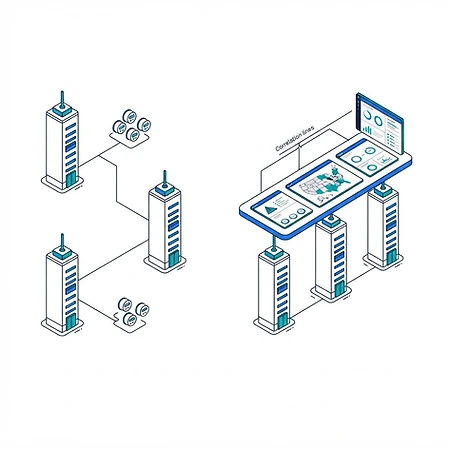
Three consoles, three alarm names, no shared context.
One case, one owner, one audit trail across every head-end.
02What a head-end system does
The head-end is the communication system for meters. It schedules and collects reads, receives alarms and events, sends commands such as on-demand reads, disconnects and configuration changes, and delivers firmware and security keys.
It is built around devices and the network that reaches them. It is usually supplied by a meter or network vendor and works best with that vendor's equipment.
03What an operations layer does
The operations layer is the system the operations team works in every day. It takes events and KPIs from every head-end, data-quality signals from the MDMS and context from networks, GIS, ADMS and field systems, and puts them in one model.
On that model it finds root causes, runs triage cases, triggers remote action through the head-ends, plans field work only where it is needed, and records SLA and audit evidence. smoc.cloud is a vendor-neutral operations layer.
04Side by side
The two systems overlap very little. One is about talking to devices, the other about running the service those devices deliver.
| Head-end system | Operations layer | |
|---|---|---|
| Main question | Did this meter respond, and what did it send? | Why is it failing, what is the cheapest fix, are we meeting SLAs? |
| Scope | One vendor family or communication network | Every head-end, vendor, utility type and region |
| Data it sees | Reads, events and alarms from its own devices | Head-end events, MDMS quality, network, GIS, ADMS and field data |
| Actions | Sends commands to devices | Decides which action to take and runs it through the right head-end |
| Main users | Metering and comms engineers | Operations centre, field planning, service and SLA owners |
| Replaces the other? | No | No: it depends on head-ends to reach meters |
05One fault, two views
A cell site goes down. In the head-end, it looks like thousands of separate missed reads and comms alarms, often across several consoles. Without context, each one can become a ticket or a truck roll.
In the operations layer, the same events are grouped into one incident with one cause. Once the site is restored, the meters are re-read remotely, and only the handful that still fail get a field visit.
- 01 · HES
Reports missed reads and comms alarms.
- 02 · MDMS
Flags gaps and estimates for billing.
- 03 · Operations
Correlates with a cell outage and firmware version.
- 04 · Operations
Triggers remote re-reads through the head-end.
- 05 · Operations
Sends a crew only to the few meters that need one.
06Do you need both?
Yes. Meters cannot be reached without a head-end, and a head-end alone cannot run a multi-vendor estate. The operations layer adds value without replacing anything, which is why it can be added in weeks rather than years.
If you run a single head-end with no cross-system reporting, its console may be enough for now. Once you have two vendors, two utility types or SLA reporting to evidence, the operations layer is where the savings come from.