Vendor-neutral smart metering operations platforms compared
There are five common ways to run a multi-vendor smart metering estate: vendor head-end consoles, a multi-vendor head-end, MDMS exception management, an in-house data platform, or a vendor-neutral operations layer. The first three each cover one part of the job: communication or data quality. An in-house build can cover more but is costly to finish and maintain. A vendor-neutral operations layer such as smoc.cloud sits above existing systems and gives one view, root-cause correlation, remote action and SLA evidence across every vendor, without replacing anything.
01The five approaches side by side
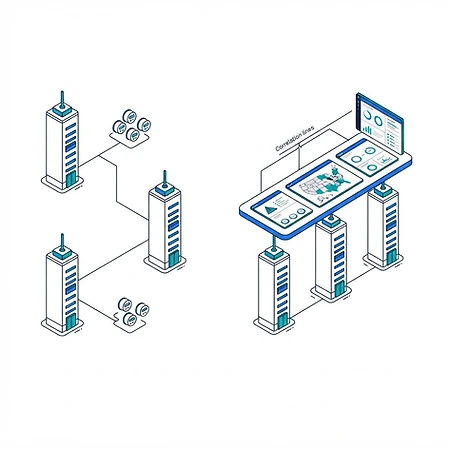
The figure and table compare each approach on what it covers, what it does well, where it stops and which estates it suits. Most utilities combine more than one: the question is which one owns day-to-day operations.
| Approach | What it does well | Where it stops | Best fit |
|---|---|---|---|
| Vendor head-end console | Deep control of one manufacturer's meters and network. | Sees only its own devices. Alarm names, KPIs and users differ per vendor. | Single-vendor estates |
| Multi-vendor (universal) head-end | One communication layer for several meter brands. | Still a communications system: little context from networks, GIS, ADMS or field work, and switching head-ends is a large migration. | New rollouts that can standardise on one head-end |
| MDMS exception management | Flags missing or suspect reads and estimates gaps for billing. | Sees the symptom after the fact, not the cause in the network or head-end. Not built for remote action. | Billing accuracy and data quality |
| In-house data platform build | Full control and custom dashboards. | Every vendor, protocol and KPI is a project to build and maintain. Correlation and audit trails are rarely finished. | Utilities with large, long-term data engineering teams |
| Vendor-neutral operations layer (smoc.cloud) | One view and one model over every head-end and vendor, root-cause correlation, remote action, SLA evidence and one audit trail. | Does not replace the head-end or MDMS. It depends on them for meter communication and billing data. | Multi-vendor or multi-utility estates, integrators and managed service providers |
02What vendor-neutral should mean
Vendor-neutral is used loosely. For operations, it should mean three things: it works with every head-end and meter vendor you run today, adding a new one does not mean rebuilding workflows or KPIs, and it does not require you to move meters onto its own communication stack.
A multi-vendor head-end is neutral about meter brands, but it becomes the new single point of dependency for communication. An operations layer is neutral about head-ends too.

03Questions to ask any platform
Does it replace any system we already run, and what migration does that involve? Can it tell a comms fault from a meter fault before a job is raised? Can operators act remotely from the same screen? Are KPIs and SLAs calculated the same way for every vendor? Is every action in one audit trail? How is one client's or region's data kept separate?
Ask for a demonstration on your own vendors' data rather than a generic estate.
04When an operations layer is the right choice
It fits best when you run two or more head-ends or meter vendors, operate more than one utility type, manage estates for several clients, or face regulatory and SLA reporting that is currently assembled by hand.
If you run a single vendor end to end and have no cross-system reporting needs, that vendor's console may be enough for now.